
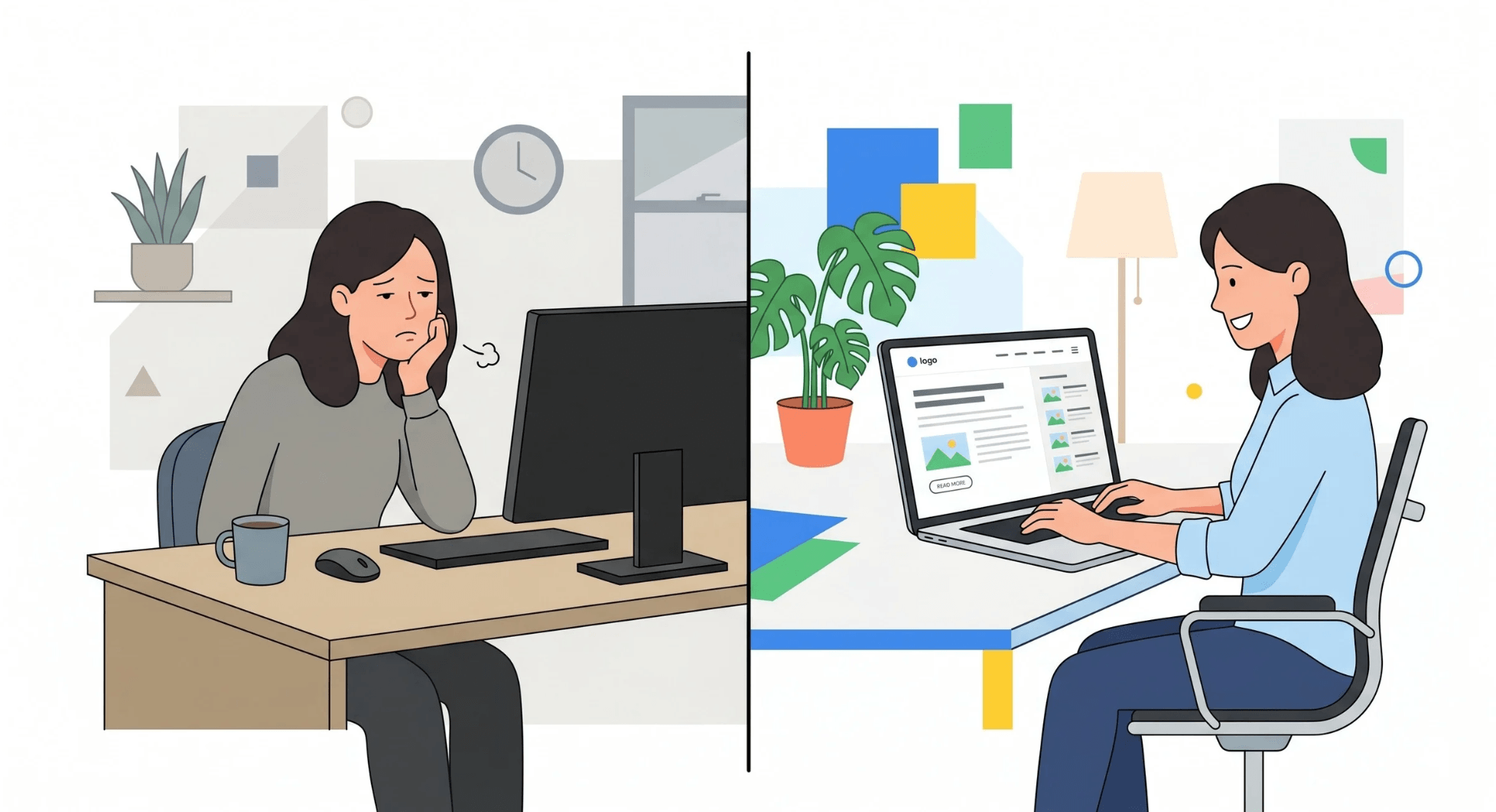
It’s not 2013 anymore, Google doesn’t just reward passion, it rewards real value now.
Can you imagine someone who has worked as a construction worker for 15 years and has real field experience, deciding to start an astronomy blog to make extra income and possibly in hopes of quitting their 9-5 one day?
They are making a huge mistake by not starting a blog related to construction, where they can write so much better content.
I have seen lots of new bloggers make this same mistake, including myself, in my 2 years of blogging and SEO. Just because they heard the advice “blog about your passion”. Which is not always true and doesn’t work for everybody.
In 2026, blogs that rank on Google are written by people who show real experience, expertise, authority, and trust.
This post will tell me why the advice blog about your passion fails for experts who have experience, and what to do instead.
Why Passion Blogs Fail for Experts
Think about a travel niche, for example, most probably you are competing with bloggers who travel full-time, post regularly, have established authority, and have thousands of backlinks.
You are competing with someone who treats it as their full time work, so unless you also spend that much time in your blog its really hard to outrank someone whose entire work is around that blog.
The Niches Google Will Never Rank You
Let me tell you a personal story, when I started blogging, the first niche I chose was mental health because I was passionate about it, but a few months later, after spending 100s of hours on it, I still failed to rank on Google.
After doing the research, I realized I chose the niche that falls under the category of YMYL, meaning Your Life, Your Money.
It’s Google’s label for any content that could seriously affect someone’s health, money, safety, or happiness. I was competing with big websites like Psychology today, PubMed, for rankings. It was obvious that Google is going to prioritize them over me.
So, in my experience, this is one of the reasons why most passion blog fails because people choose niches like finance, health, or anything that requires some real expertise and experience.
Why Most Bloggers Give Up
Burnout is so common in bloggers than you realize, I see this all the time, most people start a blog and cannot continue because they don’t realize how much time and effort blogging actually requires.
When you start from scratch, especially in a topic you’re just passionate about, you have to invest a significant amount of time building knowledge, credibility, and content.
Traffic That Never Pays You
Another problem is that some niches lack the right audience, or the audience cannot pay you.
Sometimes a niche looks good because there is low competition. But low competition often means low demand.
For example, I once started a blog based on my passion for Journaling. I chose a niche focused on “journaling for introverted college students”. At first, it sounded like a good idea.
But after a few months, I realized there was not much audience for this topic. Most college students were not searching for it.
Also, college students usually do not have strong buying power. They are less likely to spend money compared to working professionals or parents.
That means even if I got traffic, it would be hard to make money from it.
The Biggest Blogging Mistake Experts Make Without Realizing It
Why Google Ranks People Who Have Real Experience Over Everyone Else
You do not need a job title to have expertise. If you can solve a problem, that is enough.
If a skill solves a real problem, there is demand for it. For example, A digital marketer helps businesses get more customers or a fitness coach helps people stay healthy.
Personally, I have used tools such as ChatGPT, Claude, and Perplexity to help people in IT troubleshoot their problems and improve their prompts.
That showed me something important, that when you can help someone even a little, that is content.
Why Google Trusts Real Experience
After looking at many blogs, both big and small, one thing is clear to me, it is your expertise and experience that makes you blog unique.
Google wants to give users the best answers.
To do that, it looks for signs that shows, writer understands the topic, content is not copied and the advice is clear and useful.
This is called E-E-A-T (Experience, Expertise, Authority, Trust) in Google’s language.
You do not need to remember the term, just remember Google trusts people who actually know what they are talking about and can actually show it.
What If Your Job Is Not Bloggable?
It is true that not every job was designed to teach you something the internet wants to learn. A cashier, a factory line worker, a fast food employee, there is absolutely nothing wrong with these jobs. But someone will not ask you to teach them your job in a blog.
So before you decide ask yourself these questions:
1) Does people search online to learn what I do.
2) Does my job requires a skill that took months or years to develop.
3) Can I explain my work in steps or tutorials.
4) Does my field has tools, software, or methods beginners struggle with.
5) Does my work produces visible results (designs, code, plans, campaigns).
6) Do people pay for courses or freelancers in my field.
7) Do I have experience others in my industry would pay to shortcut.
Some jobs with natural blog leverage include roles like graphic designer, web developer, architect, construction manager, digital marketer, accountant, lawyer, doctor, nurse, personal trainer, interior designer, software engineer, video editor, photographer, chef, data analyst, teacher, financial advisor, copywriter, HR manager, and UX designer. If your job appears anywhere on that list, you have a really good starting point.
If your job does not carry any of those skills, then think about what you know outside of work. A hobby you have practiced for years, something you taught yourself, a topic you genuinely know more about than most people.
You can still build a blog around that. A hobby blogs can work, but if your goal is to make money and grow, you need to pick a hobby that people are already searching to learn, not just something you personally enjoy.
Conclusion
If you have read this far, you already know the answer. You have a skill, a job, or at the very least a topic that someone out there is searching for.
Most people overthink the beginning. They wait until they feel ready, until they have the perfect niche, until the timing is right. The people who actually grow a blog are the ones who started before they felt ready and figured it out along the way.
Now, the next real question is: how do you actually grow a blog without spending much time on it?
That is exactly what I cover in my next post. I reviewed Blotato, one of the AI tools I personally used and tested to manage and grow this blog while working full time. If your time is limited but your goal is real, that post is worth reading next.
→ Blotato Review: The Best AI Tool for Growing a Blog While Working Full-Time